

Your machine

Your Volvo EC220
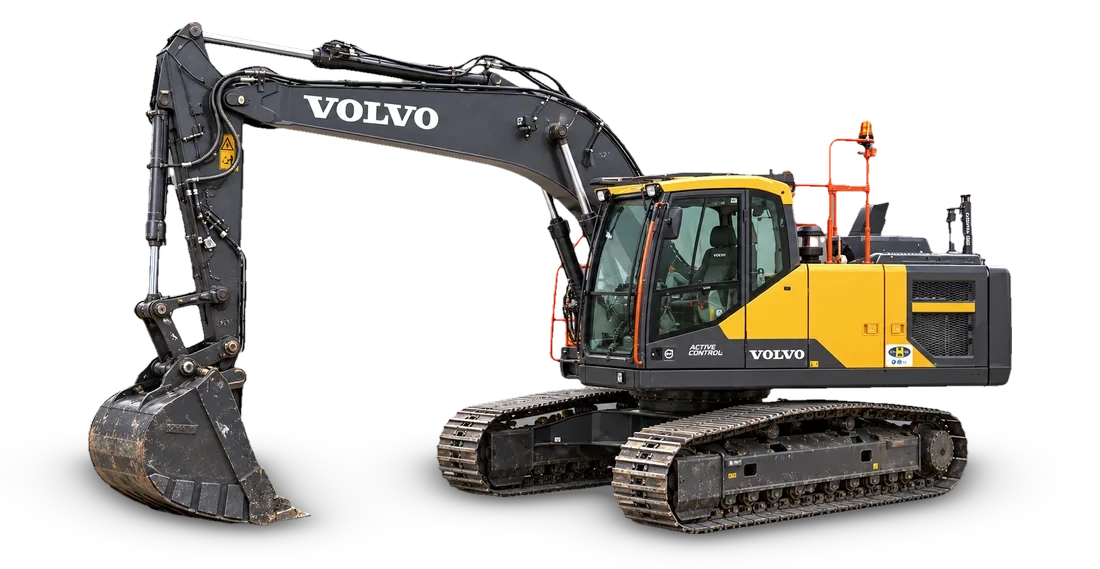 Choose coupler
Which version do you have?
- Volvo EC220Efrom 2015Operating weight 23,380–26,210 kg
- Volvo EC220DOperating weight 21,780–24,270 kg
- Volvo EC230from 2024Operating weight 23,380–25,560 kg
The machine’s weight varies between versions. Answer the counterweight question.
Does not fit? Free return. Fit guarantee
The machine’s coupler is not stated.
May fit your EC220 20 pcs
We check your machine with you before you buy.
- Excavator Attachment Brackets7 pcsThe attachment’s machine class is not confirmed. The attachment’s bracket is not confirmed.
- Pallet Forks4 pcsThe attachment’s machine class is not confirmed.
- Grading Beams3 pcsThe attachment’s machine class is not confirmed.
- Rippers6 pcsThe attachment’s machine class is not confirmed.
Package price for your EC220
Tell us what you will be doing and we call with a price on what fits. We already know the machine and coupler.
Choosing attachments for the Volvo EC220
The Volvo EC220 is a 22-tonne machine and one of the most common production units on Swedish sites, built for bulk handling, road and heavy digging all day. On the S70 hitch it drives large buckets, strong breakers and sorting grapples, and here attachments built for sustained running pay off over cheap alternatives.
Common jobs for the Volvo EC220
The Volvo EC220 mostly runs in pure production. On Swedish sites you see it in bulk handling, road building, rail work and heavy digging where what counts is how many cubic metres it moves per shift. At 22 tonnes it has the force to work full days without losing pace, and that endurance is exactly what you pay for when you pick attachments for it.
On a big road job the EC220 lays pipe and cable, rips up old sub-base and loads spoil onto dumpers. On a demolition it takes concrete and rebar. Since the machine stays put in the same kind of work most of the time, it pays to have the right attachment fitted so you avoid changes mid-production.
When you look for attachments for the Volvo EC220, think uptime over price. A cheap attachment that cracks after one season costs you more in downtime than one that lasts. That is the difference between an attachment rated for the 22-tonne class and one that is undersized.
Buckets and attachments that fit the EC220
For a 22-tonne machine you choose large digging buckets for excavation and a wider grading bucket for fine work and levelling. Bucket size is governed by the machine weight and how far out you dig, a bucket that is too big makes the machine sluggish and heavy at the front.
A sorting grapple belongs on the EC220 for demolition and material handling. It loads stone, pulls structures apart and sorts spoil without you swapping to a bucket. At this weight the machine carries the grapple steadily even well out from the tracks.
All attachments run on the S70 hitch, the standard for this class. That means you can build up a set of digging buckets, grading buckets and grapples that all fit the same hitch and swap quickly between jobs.
Hydraulic breaker and heavy attachments for the EC220
A 22-tonne machine drives a strong hydraulic breaker without trouble, and it is often the breaker that decides what the EC220 can take on. For rock, concrete and frozen ground you need a breaker rated for the machine weight. A breaker that is too light hits slowly and wears prematurely, one that is too heavy strains the machine.
Always check the oil flow against the breaker spec before you buy. A machine in the 22-tonne class has plenty of flow, but the breaker has to be matched to your machine hydraulics to hit at full force.
For compacted ground and rock the breaker will not take, a ripper pays off. It tears up the ground so the bucket can get in, and on a machine with the EC220 force it makes a real difference on heavy ground.
S70 quick hitch and fit
The Volvo EC220 runs an S70 hitch, the heavier coupler for large excavators. When you buy attachments, check they are listed for S70 or they will not fit. The hitch is sized for the forces a 22-tonne machine puts on the attachment, so it is not something to cut corners on.
A tiltrotator is possible in this class and makes the machine more versatile, but on a pure production unit that mostly digs and loads it is not always worth it. Think through what the machine actually does most before you invest in a tiltrotator over more buckets.